

Precision Rifle Shooting
High-Precision Shooting Training
1. Fundamentals of Rifle Shooting
- Proper body position: prone shooting, hand positioning, stock placement, trigger control.
- Adjusting the optical scope: parallax, diopter settings.
- Working with optical scopes: types of reticles, measurement units, making adjustments, holdovers.
- Breathing techniques and trigger control, recoil management.
- Setting up a ballistic calculator: factors influencing accurate shot calculations.
- Selecting ammunition for effective shooting.
2. “Police” Sniping
- Shooting in urban environments: short- and medium-range engagements with small or limited target zones.
- Shooting from buildings or vehicles, utilizing camouflage elements.
- Shooting at targets positioned at upward or downward angles.
- Engaging targets under time constraints.
3. “Military” Sniping
- Long-range shooting: ballistics and windage adjustments.
- Camouflage and setting up firing positions in field conditions.
- Teamwork: coordination with spotters and other shooters.
- Coordinated dual shots.
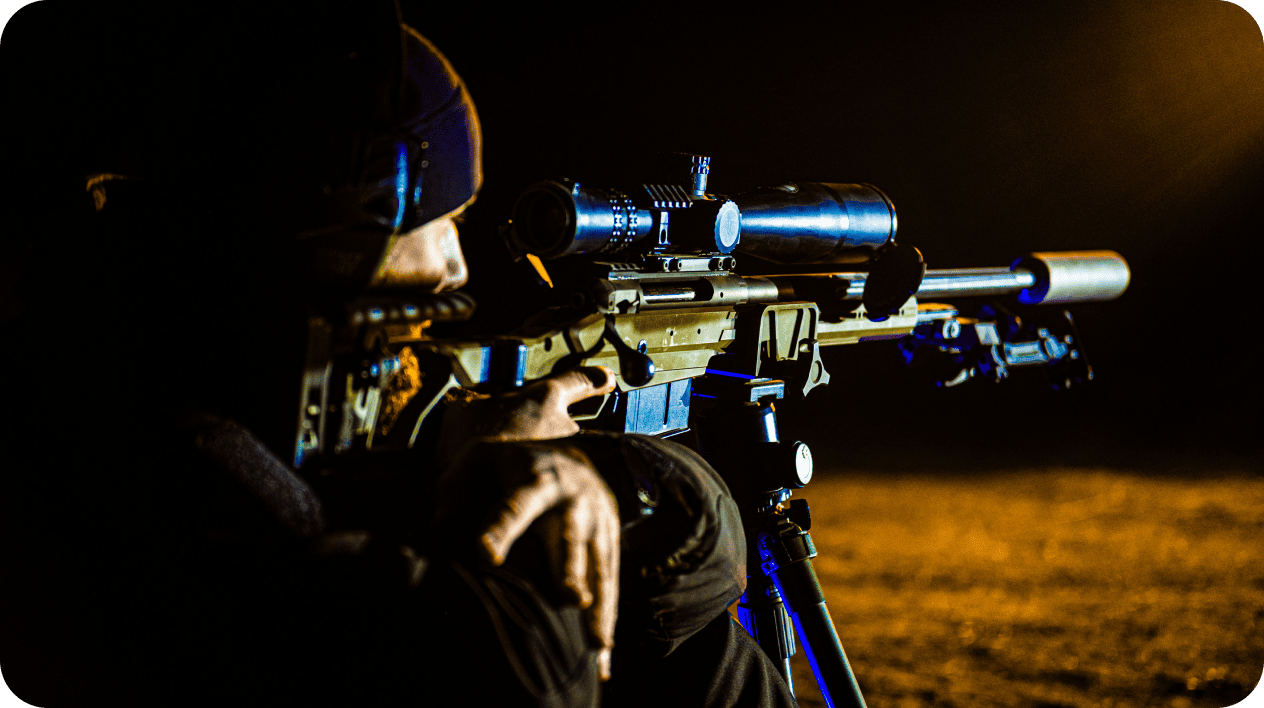
- Night shooting using night vision attachments (consider removing this section).
4. Shooting from Unstable Positions Without Support
- Classic unstable positions: sitting, kneeling, standing.
- Exercises to improve efficiency when shooting without support, key points to focus on, and methods to verify the correctness of the shooting position.
5. Shooting from Unstable Positions With Support
- Setting up and using tripods or other support structures.
- Working with improvised supports (backpack, branch, wall, etc.).
6. Shooting with Thermal Imaging Scopes
- Basics of working with thermal imaging scopes: calibration, settings, and zeroing.
- Shooting at various distances and from different positions using a thermal scope.
Training Formats - Theoretical Preparation: Lectures, materials on ballistics, and case studies.
- Practical Training: On the range, exercises with dry firing, position setup, and live-fire practice.
- Final Exam: Test shooting for accuracy, speed, and performance in various conditions.
7 Responses